
After your rifle, the most expensive item you'll need to pick is your scope. This decision is no less important than the rifle. It's worth spending time picking the best scope for you.
First, you need to decide if you want to operate in Mils or MOA. Many shooters will say Mils are better, Mils are what's winning, Mils rule, etc.
Well, guess what: both are simply units of measure. Neither is better or worse than the other. Mils are winning because that's just how most suitable scopes are designed.
Don't get me wrong, some very usable scopes are available in MOA versions, but not many. The reason for this, as I see it, is that many optics makers are vying for government or military contracts. Both the U.S. and foreign militaries use Mils.
Personally, I prefer MOA. It's just simpler for me to wrap my head around and figure out quickly. I feel that way even though I used to teach Mils in the military.
Years ago, you had to be careful when you bought a Mil reticle scope to ensure it had Mil movements. That is really not a problem these days. MOA scopes come with MOA movement, Mil scopes with Mil movement, so it's relatively easy.
Most of the best scopes for precision shooting come from a few manufacturers:
Some of these brands are more expensive and higher quality than others, but they all make perfectly serviceable scopes. Choose the best scope you can afford and attach it to the rifle with the best mounts you can afford. More on that later.
I have experience with Nightforce, Vortex, Bushnell and Burris (in that order). I changed scopes not because one was better than the next but due to manufacturer support responsibilities. All performed excellently and provided clarity and precise movement.
Of the four, the Bushnell was a Mil scope while all the others were MOA. The Bushnell did not have illumination, which rarely comes into play except for the occasional match with low-light scenarios. Still, it's a distinct benefit when you need it.
I currently run a Burris XTR II, 3-15x50. I feel this is more than ample magnification, I've never needed more magnification and occasionally needed below 6x, especially for offhand shots or night stages.
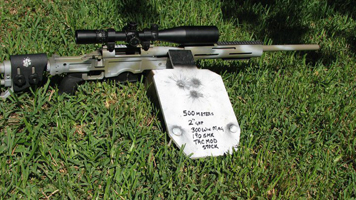
The Burris also comes with some very desirable options:
The Vortex and Bushnell optics I've run are both at or over 20x but drop low enough to be useful. I wouldn't have an issue having to revert back to any of them.
The ability to have zero stop on the scope is a match-saving feature. So is some means of locking down the turrets after dialing corrections.
At matches, I have forgotten my marks on the elevation dial and been one complete turn off. I have had knobs turn from zero and just counted clicks instead of verifying that I was actually on the correct mark. These are frustrating little oversights that can be easily eliminated by taking the time to select your scope carefully.
A great rifle and great scope won't do you any good if you have a cheap mount holding them together. Make sure your scope is installed properly. Once you've decided on the scope, you need to pick a worthwhile mounting system.
First choice: one-piece ring set or separate rings? I use both but prefer separate rings. This lets me place the rings as far apart as possible to support the sometimes massive scopes that we use.
I've had good luck with Warne mounts and rings. They provide very good value for your money, and the company is an avid supporter of the sport. I also use Spuhr rings.
Like everything else, choose the best rings you can afford once you're ready to commit. Lap the rings to hold the scope securely without undue stress or high points. A poor mounting can easily damage the scope.
When you're mounting, level the scope to your gun. Make sure your eye relief fits your cheek weld while you're in various positions. Your rifle should place your eye at the proper level for the mounts and rings you've chosen.
When setting eye relief, I always set up my scope with the magnification at the highest mark. The eye box and eye relief is at its most critical at that point. If you do it correctly at the high mark then it should be set for all lower magnification points.
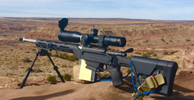
You'll likely end up with a Picatinny rail mount since these have pretty much become the standard attachment. Make sure your mount lays flat with no gaps when attached to the rifle from only one end. If it does have a gap, it will be stressed when screwed down tight to the rifle.
One other piece of useful kit is a level of some kind. This lets you know that your rifle is level to your scope and to the target.
Levels are made that attach to the scope or to the mount. Spuhr rings even have a small level embedded into them. You'll find a level useful and very nearly a necessity for accurate shots at long range.
Probably the most useful extra gear you'll need is a good ballistic program. I have used JBM and another program called Shooter on my iPhone.
Beyond ballistic data, the software can also give you corrections for shooting on a slope or angle. You can actually sight along the edge of your phone or iPad at the target to get the exact angle. (A LRF can also give you the true horizontal distance to the target.)
Like most computer programs, you need to feed good data in to get good data out. If you guess at input data, then you can't expect hits on distant targets.
It's vital to provide accurate velocity info for this software, not just manufacturers' suggested velocity. This means you'll need access to a chronograph. A chronograph is also necessary for any load development you do.
A good chronograph will provide you with standard deviation for your load along with extreme spread. Both of these tell you how consistent your load is in your gun.
Don't get intimidated by this software once you start and think you need to do something with every number. Some of the info these programs provide is vital while other bits are interesting though trivial. Most useful is obviously wind drift and elevation corrections.
I have my ballistic program on my phone as well as on my laptop. This lets me check or update data wherever I am, and it comes in handy.
Once I know match conditions, I'll make a data card and attach it to my rifle or sleeve. I normally use data for a 10mph wind. That way, it's easy for me to either halve that or double it as needed.
Of course, there's nothing stopping you from running data right off your phone at a match. Many guys do just that.
I hope the gear advice here gives you a good starting point. If you're curious, here's a list of my current basic gear for a match:
For my spotter, I use a Vortex Razor spotting scope with an MOA reticle. I need my spotter to give me corrections that will correlate to my scope. I occasionally have the spotting scope on a Manfrotto tripod that I can shoot from if needed.
These pieces of kit were acquired after considerable thought and making do without or trying to compromise with lesser gear. While compromise can be good, you really shouldn't settle for less. It's a terrible feeling when you know you could do better but your equipment lets you down, especially in competition.
Like I said, I hope this gives you a good starting point for spec'ing out your rifle. It's a huge topic to tackle, and this just scratches the surface.
Next month, I'll run down how to practice for precision shooting. If you're spending the time and money on a match, you want to go in ready and confident. See you then.
Want to be kept up to date with the latest news from JP Enterprises?
Want access to the latest exclusive deals?
Click below to subscribe to the JP BULLETin.

Social Media