
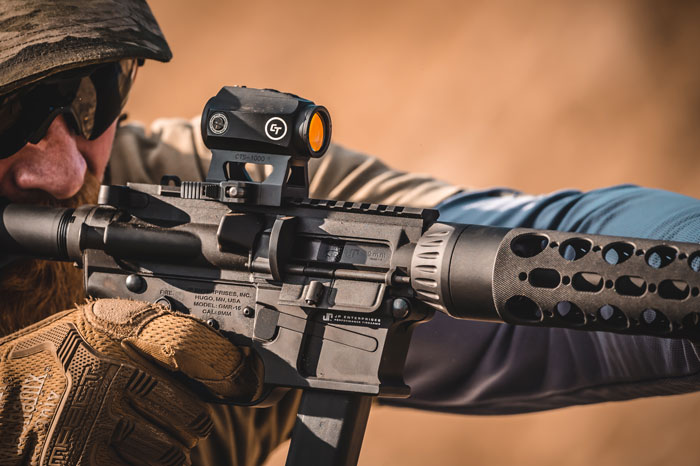
Are you a competitive shooter who wears gloves when you shoot? My experience is that most people in the shooting sports do not. Look around at your local events, and the percentage will be relatively low to nonexistent.
How about if you are a law enforcement or military member who uses a firearm as a component of your job? Do you shoot with gloves on or spend time training wearing gloves?
In all cases, if not, why not?
I’m a big advocate of shooting with gloves, especially for LE/military as I’ll lay out here. But even in competition, there are significant benefits to shooting with gloves. And if we view all competition shooting as another form of preparedness training for real-life survival shooting, I’m sure you see the connection.
For those in law enforcement and the military, survival is a combination of many things including mindset, training and preparation to name a few. For the purposes of this article, there are three physical things necessary to ultimately win a gunfight and defeat an adversary. These are:
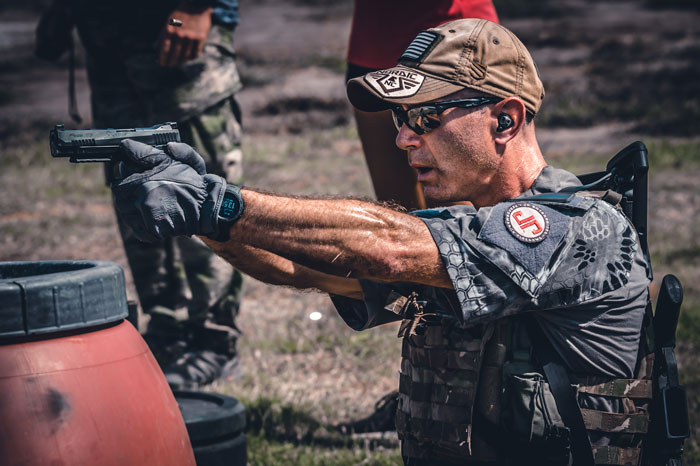
When viewed in this light, it becomes clearer how each of these elements needs to be considered to maintain effectiveness. We spend plenty of time focusing on our guns, and most shooters are good about taking care of their eyes. Hands, however, get overlooked.
Here’s my case for why gloves should be part of your shooting routine. Most of these points come from an LE perspective, but ask yourself if anything mentioned here could never apply to you.
At their simplest level, gloves put a barrier between your skin and something else. I work with a lot of cops who “glove up” en route to their calls. The people that we deal with are often dirty and unsanitary, and there’s no reason to risk unnecessary exposure.
That’s not to mention the little germaphobe ingrained in our heads over issues like HIV, Bird Flu, H1N1 and contact overdose associated with heroin and fentanyl. Now, with the shared experience of COVID-19, we’re at a whole new level. Reducing physical contact with another unknown party is never something you’ll regret having done.
For those in the northern states, right about now we have cold weather to contend with. Chris Cazin once sent me a picture of his squad’s exterior thermometer readout a few years back when he was still working in northern Minnesota. The raw temp was -41°; that’s 41° degrees below zero. I bet some of you reading this did not even know it could get that cold in the lower 48.
Cold and or cold/wet hands don’t function well. You would be amazed at how quickly the dexterity in your hands can fail you once they get cold. Plastic guns and plastic grips don’t help, and neither do metal-frame handguns or AR-15 aluminum hand guards.
At the other end of the spectrum, how about sweat? Depending on the grip surface of your firearms, a sweat-soaked glove can help you get a better grip than sweat-slicked skin.
Many LE-style gloves have some type of carbon knuckle to protect from injury, whether scrapes or impact. The goal is to keep your hands in working order so you can use them to defend yourself in a fight, hold a gun and pull a trigger. There are very few situations where wearing gloves as protective equipment doesn’t provide at least a small benefit, even in competition.
In December of 2018, I competed at the Hard As Hell 3-Gun in Utah wearing gloves for most of the match. I’d even practiced quad-loading my shotgun gloved ahead of time. Temperatures were cool to cold and wet. It was worthwhile because there were some obstacles where grip combined with muddy objects kept my hands protected.
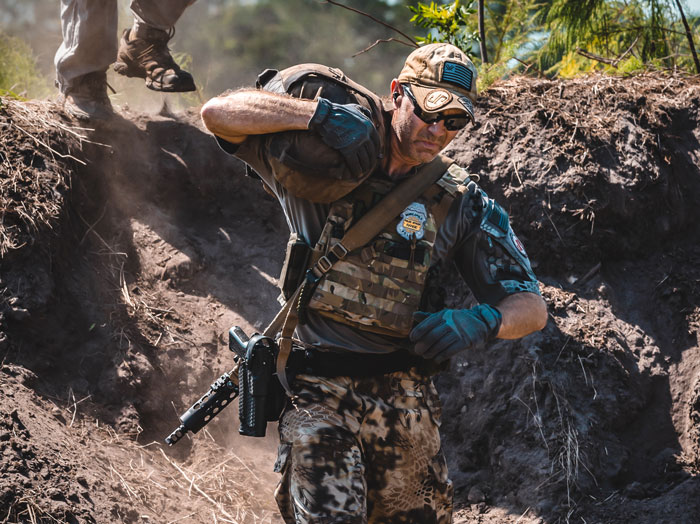
Since then, Chis Cazin, Shawn Nelson, Peter Johnson, and some of the JP guys have been competing in the Tactical Games. Obstacles at the events I’ve attended included concrete walls, wooden walls, climbing ropes, dragging ropes and farmer carry with heavy objects.
I’ve worn gloves exclusively for all Tactical Games events and never regretted it. Dexterity was not the top concern when my heart rate was pumping at 185 BMP. In fairness, I may have been able to mitigate a few missed shots if I did not have gloves on, but I consider the trade-off worthwhile. I never had to give much thought to any items I was grabbing onto for fear of injury.
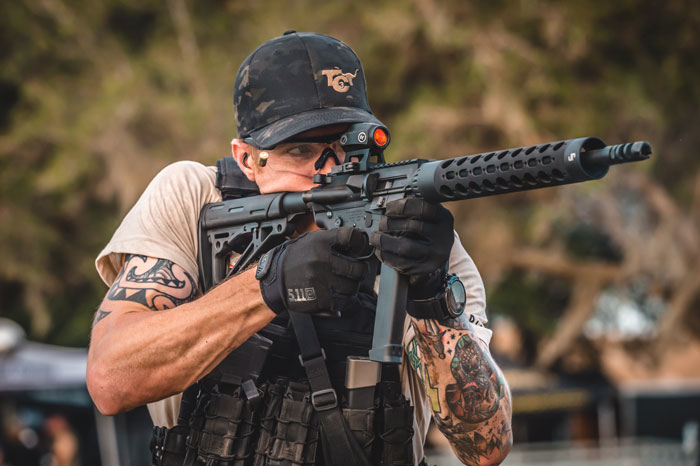
So, do you train wearing gloves?
It’s a cliché at this point to talk about how people don’t “rise to the occasion,” but rather “fall back to their training,” but it’s true. Especially if you’re a cop, do you ever practice with gloves on the range? Or do you just assume you’ll shoot with them when you’re on a call? If you’re doing the latter, you are putting yourself at a disadvantage.
And in case you’re thinking it, yes, fingerless gloves offer some protection but miss the point in protecting the most important parts of the hand.
Getting back to competition shooting, will gloves help you shoot your match? Sure, depending on what kind of scenario is thrown at you, they can help with protection from damage. They can surely help to combat the cold when shooting in colder climates. And the more you practice with them, the less of an impediment they’ll be to your shooting.
Whatever kind of shooter you are, you may not want to shoot with gloves all the time, but they should be used and incorporated into your training. Work with full gloves and learn to shoot with them for all the reasons stated above. Be prepared to protect your hands.
Get yourself a good pair of summer weight and winter weight gloves, and get a feel for the trigger with them. Choose gloves that give you comfortable access to the trigger, particularly when it comes to winter gloves where you’ll want a low-full design.
Simply stated, preparedness is a vital part of gun ownership and use. Many people will never have to face a life-or-death situation with their guns, but we don’t have the luxury of assuming that to be the case. So, since you might have to navigate a shooting situation where gloves could make a major difference in your favor, spend the money and the time training with gloves.
Jay Schmitt is one of the founding members of the Minnesota 3-Gun Group and has been shooting 3-Gun for over fifteen years all across the United States. As a police officer for the city of Minneapolis, Jay has two decades of law enforcement experience and has received both the Medal of Honor and Medal of Valor for his service.
Want to be kept up to date with the latest news from JP Enterprises?
Want access to the latest exclusive deals?
Click below to subscribe to the JP BULLETin.

Social Media