

“Practice like you’ve never won. Play like you’ve never lost.”
- Michael Jordan
Becoming great at something is not easy, and it shouldn’t be. Steel Challenge is no different, no matter how simple the game may seem. Hit five plates as fast as possible, how hard could it be? In reality, Steel Challenge is actually quite easy…until you compare yourself to the elite.
To reach the top there is only one thing to do, and that’s to practice. What many don’t realize is that practicing is an art in itself. Good practice leads to rapid improvement. Bad practice leads to frustration and often time poorly spent.
My approach to practice centers on four areas. I believe these lead to much greater improvement than simply “practicing for the sake of practice.” This is not a comprehensive guide on how to practice. Rather, these are simply ingredients that I believe will improve your game if used in conjunction with other sources.
This is also not a guide on how to shoot each stage or what practice drills are used. For that, I’ve included a few references below. Jeff Jones has a great article on how he practices the Steel Challenge stages. Then, I’ve also included Steve Foster’s write-up on how to shoot each stage.
The one thing I’ll offer on this topic as that I recommend finding your preferred shooting order for each stage before sinking hours of work into a stage.
Infrequent practice will not lead to substantial improvements. My personal goal for practice is to get to the range at least three or more times a week for dedicated live fire practice during the season. Off season, I will push that to five or six days a week, but that is mostly dry fire.
I prefer to be very fluid on when I decide to practice. Some days, I have basic life activities after work like grocery shopping, which means no practice that day. That does not mean I practice less that week. It simply means I must make the day up later in the week.
Show up to practice. The more you practice the faster you’ll improve.
So, you’ve made it to practice, but what if you’re not mentally “in the game.” You go through your entire practice regime, shooting some 200 rounds, but by the end, you remember none of what you have just done. You may as well have not shown up to practice that day.
Practicing for Steel Challenge tends to be a very light physical workout, but by the end, you should be mentally exhausted. You need to make the conscious effort to focus throughout the entirety of practice.
All internal distractions need to be blocked out. Leave everything behind when you step out onto the range. What happened at work or school means nothing during this time. This time is strictly dedicated to improving yourself.
Needless to say, this also means removing external distractions. Cells phones and other people are the main culprits here. Airplane mode is a great feature.
Be 100% mentally in the game during practice, nothing else matters.
When I first started practicing, I thought shooting each stage all the way through was a great exercise. Eventually, I came to realize why that’s wrong. By only shooting a full stage as practice I was just improving on what I was doing correctly and enforcing all my bad habits along the way.
Now, I like to shoot the stage twice right away when cold to see if I can spot any bad habits that need work. Let’s say that I consistently missed plate 3 of Five to Go on my two strings. That is what I will work on first before moving onto any pre-planned drills (many of which can be found in Jeff’s article above).
During practice, I try to be my own coach. Throughout the session, I will mentally examine everything I do to see what’s working well and what areas need improvement. If I find something that needs work, I will either figure in the next session or solve it right away.
Take the time to note your thoughts about what are you doing right and wrong after every string of every drill. The conscious mind works hard during practice so the subconscious mind can thrive in competition. Here are some examples of the notes I’ll make in a session:
Know what you are doing right and wrong every step of the way.
Here is where everything comes together. You’ve shown up for practice, you’re mentally ready to practice, and you are seeing what you are doing right and wrong. For everything you’re doing right, reinforce by telling yourself it is like you to do that thing.
When you see yourself doing something wrong, immediately stop and figure out how to solve the issue. That could mean a web search, trial and error, talking to a mentor, etc. Never leave an issue unsolved. Even if you have to carry that problem with you, just recognizing it is a huge benefit and the only real way to solve it.
To this day, there are problems I have faced from day one that I have yet to solve. I do not dwell on them in an emotional way. But I continue to search for ways to solve the problem because I know that if I solve it, I will improve.
Find the issue and solve it, over and over again.
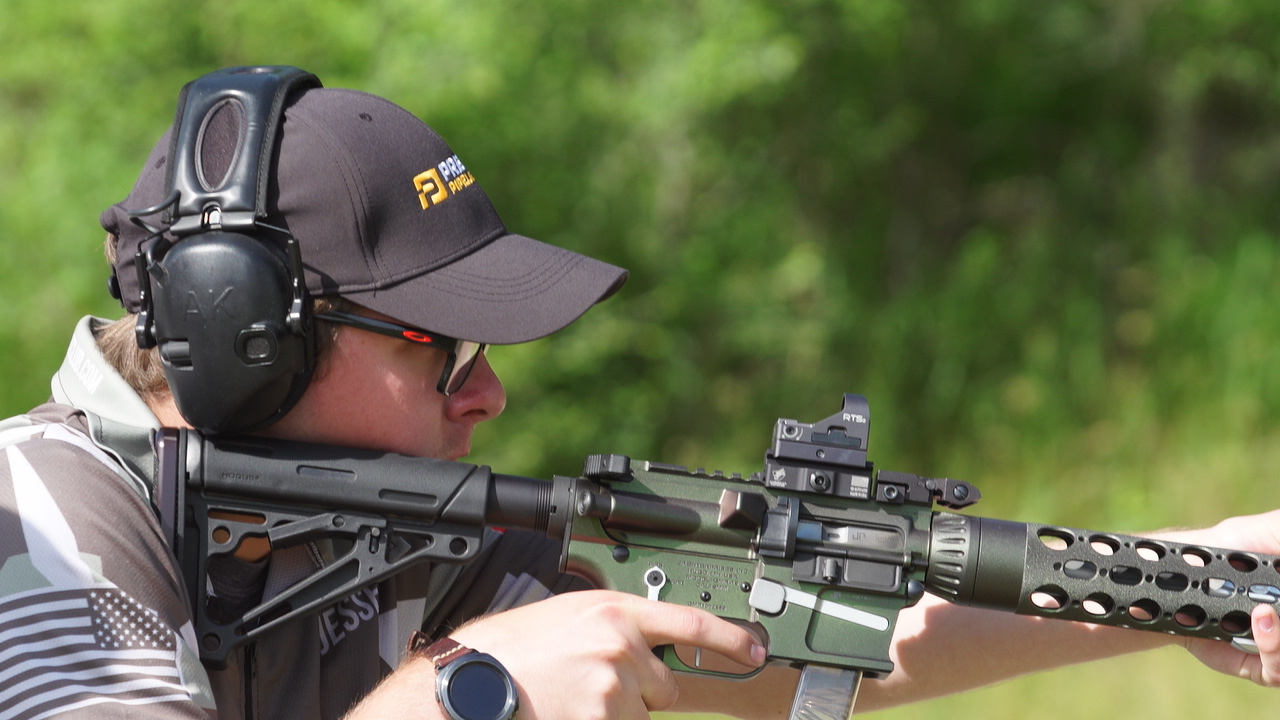
It’s taken a number of years of shooting to find a good useful approach to practice and be able to stick with it. The most critical piece of the puzzle was refusing to view practice as just taking attendance. It’s about more than just showing up.
Making the time to practice is obviously indispensable, but everyone’s time is precious. Because of that, you owe it to yourself to make the most of that time. We can all find easier and cheaper ways to waste time, so make sure you do the most with your range time to make your match performance the best it can be.
Jesse Misco is a Grand Master in Rimfire Rifle Open, Rimfire Pistol Open and Pistol Caliber Carbine Open. He is also one of the top 10 Steel Challenge shooters at the national level.
Want to be kept up to date with the latest news from JP Enterprises?
Want access to the latest exclusive deals?
Click below to subscribe to the JP BULLETin.

Social Media